{{ _getLangText('m_detailInformation_goodsActivityText') }}
{{ activityObj.name }}
{{ _getLangText('m_detailInformation_goodsActivityText') }}
{{ item.activityName }}
{{ _getLangText('m_detailInformation_goodsActivityBuyButText') }}
{{ _getLangText("m_detailIntroduction_goodsIntroductionText") }}
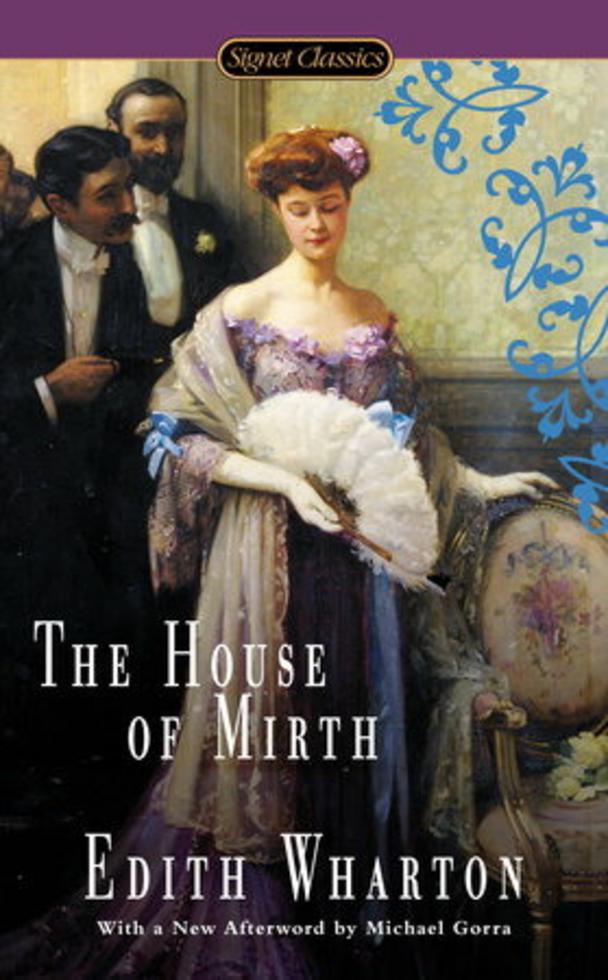
Edith Wharton’s classic novel, The House of Mirth, is a brillaint expose of the pretense and greed of fashionable New York Society.
In The House of Mirth, which helped to establish Edith Wharton’s literary reputation, she honed her acerbic style and discovered her defining subject: the fashionable New York society in which she had been raised and that held the power to debase both people and ideals. In this devastatingly accurate and finely wrought tale, Lily Bart, the poor relation of a wealthy woman, is beautiful, intelligent, and hopelessly addicted to the moneyed world of luxury and grace. But her good taste and moral sensibility render her unfit for survival in a vulgar society whose glittering social edifice is based on a foundation of pure greed. A brilliant portrayal of both human frailty and nobility, and a bitter attack on false social values, The House of Mirth has been hailed by Louis Auchincloss as “uniquely authentic among American novels of manners.”
With an Introduction by Anna Quindlen and a New Afterword by Michael Gorra
About the Author:
Edith Jones Wharton (1862–1937) was born in New York City into a family of merchants, bankers, and lawyers. She was educated privately by tutors and governesses. In 1885, she married Edward Wharton of Boston; the couple lived in New York, Newport, Lenox, and Paris until their divorce in 1913, when Wharton settled permanently in Paris. During World War I, Wharton was active in relief work in France, and in 1915, she was decorated with the Cross of the Legion of Honor for her service. Edith Wharton’s earliest stories were published in Scribner’s Magazine, but she did not include these in her first collection of short stories, titled The Greater Inclination (1899). Her most famous novels include The House of Mirth (1905), Ethan Fromme (1911), the Pulitzer Prize winner The Age of Innocence (1920), The Children (1928), Hudson River Bracketed (1929), and The Gods Arrive (1932). Wharton also wrote, in addition to her novels and short stories, her autobiography, A Backward Glance (1934). She died at her villa near Paris.
In The House of Mirth, which helped to establish Edith Wharton’s literary reputation, she honed her acerbic style and discovered her defining subject: the fashionable New York society in which she had been raised and that held the power to debase both people and ideals. In this devastatingly accurate and finely wrought tale, Lily Bart, the poor relation of a wealthy woman, is beautiful, intelligent, and hopelessly addicted to the moneyed world of luxury and grace. But her good taste and moral sensibility render her unfit for survival in a vulgar society whose glittering social edifice is based on a foundation of pure greed. A brilliant portrayal of both human frailty and nobility, and a bitter attack on false social values, The House of Mirth has been hailed by Louis Auchincloss as “uniquely authentic among American novels of manners.”
With an Introduction by Anna Quindlen and a New Afterword by Michael Gorra
About the Author:
Edith Jones Wharton (1862–1937) was born in New York City into a family of merchants, bankers, and lawyers. She was educated privately by tutors and governesses. In 1885, she married Edward Wharton of Boston; the couple lived in New York, Newport, Lenox, and Paris until their divorce in 1913, when Wharton settled permanently in Paris. During World War I, Wharton was active in relief work in France, and in 1915, she was decorated with the Cross of the Legion of Honor for her service. Edith Wharton’s earliest stories were published in Scribner’s Magazine, but she did not include these in her first collection of short stories, titled The Greater Inclination (1899). Her most famous novels include The House of Mirth (1905), Ethan Fromme (1911), the Pulitzer Prize winner The Age of Innocence (1920), The Children (1928), Hudson River Bracketed (1929), and The Gods Arrive (1932). Wharton also wrote, in addition to her novels and short stories, her autobiography, A Backward Glance (1934). She died at her villa near Paris.
{{ _getLangText('m_detailAuthorBookList_titleText') }}
{{ _getLangText('m_asideSeriesBookListBut_moreText') }}>
{{ _getLangText("m_recently_viewed_products_titleText") }}